
Scientific Committee

Coordinator
Karsten Xuereb has been a member of the Scientific Committee since 2018 and took on the role of Coordinator in 2025.
He is Research & Statistics Executive at Arts Council Malta. He previously conducted research for the UNESCO World Heritage Nomination Project at the Ministry for Culture and served as cultural attaché at the Maltese Representation to the EU in Brussels. Earlier, he had led preparations for Valletta 2018, the European Capital of Culture. Karsten holds a PhD from the Universitat Rovira i Virgili, Tarragona (2012), benefiting from a UNESCO grant and an MA from the University of Warwick (2005) as a Chevening scholar. He lectures at the University of Malta on European and Mediterranean cultural relations, policy and practice. He is a national expert for the Compendium of Cultural Policies & Trends (https://www.culturalpolicies.net/), both supported by the Council of Europe. He is president of CircE, a Maltese NGO addressing sustainable living and the circular economy. His work, including papers, articles, videos and radio programmes is available at www.culturalpolicy.blog.
Ana María Niveau de Villedary y Mariñas has been a member of the Scientific Committee since 2023.
She is currently Full Professor of Prehistory at the University of Cadiz. Between 2010 and 2016, she directed a General Research Project of the Junta de Andalucía on the Phoenician-Punic necropolis of Cadiz, one of the most significant results of which is the monograph co-published by the Diputación de Cádiz and the University of Cadiz entitled ‘Las necrópolis de Cádiz. Apuntes de Arqueología Gaditana en Homenaje a J.F. Sibón Olano’ (The Necropolises of Cadiz. Notes on Cadiz Archaeology in Homage to J.F. Sibón Olano), and the volume “Nuevas perspectivas de Investigación en Arqueología Funeraria” (New Perspectives on Research in Funerary Archaeology), published in the “Supplements to the Journal of Phoenician Studies” of the Italian National Research Council.
She is the author of numerous articles in prestigious scientific journals and has contributed to specialist conferences, many of which are international in nature. She organised and coordinated the tenth edition of the International Colloquium of the Centre for Phoenician and Punic Studies, entitled “MARE SACRVM. Phoenician religion, cults and rituals in the Mediterranean”, which brought together a large number of specialists in the Phoenician world in Cadiz and San Fernando between 13 and 15 December 2017.He has also carried out research stays at various universities and research centres in Italy, Portugal, France and the United Kingdom (the latter two in 2015 and 2017 at the University of Oxford, as part of the “Salvador de Madariaga” National Mobility Programme) and has participated in various research projects in Spain and abroad and in excavations at Phoenician sites in Spain (Castillo de Doña Blanca), Italy (Nora and Mozia) and Tunisia (Utica).

Ana María Niveau de Villedary y Mariñas has been a member of the Scientific Committee since 2023.
She is currently Full Professor of Prehistory at the University of Cadiz. Between 2010 and 2016, she directed a General Research Project of the Junta de Andalucía on the Phoenician-Punic necropolis of Cadiz, one of the most relevant results of which is the monograph co-published by the Diputación de Cádiz and the University of Cadiz under the title ‘Las necrópolis de Cádiz. Apuntes de Arqueología Gaditana en Homenaje a J.F. Sibón Olano’, and the volume ‘Nuevas perspectivas de Investigación en Arqueología Funeraria’ printed in the ‘Supplementi della Rivista di Studi Fenici’ of the Italian CNR.
Author of numerous articles in recognised scientific journals and contributions to specialised conferences, many of them international in character. She organised and coordinated the tenth edition of the International Colloquia of the Centre for Phoenician and Punic Studies, entitled ‘MARE SACRVM. Phoenician religion, cults and rituals in the Mediterranean’, which brought together a large number of specialists from the Phoenician world in Cadiz and San Fernando between 13 and 15 December 2017.
She has also carried out research stays at various universities and research centres in Italy, Portugal, France and the United Kingdom (the last two in 2015 and 2017 at the University of Oxford, as part of the ‘Salvador de Madariaga’ National Mobility Programme) and has participated in various research projects in Spain and abroad and excavations at Phoenician sites in Spain (Castillo de Doña Blanca), Italy (Nora and Mozia) and Tunisia (Utica).

Rachid Chamoun has been a member of the Scientific Committee since 2017 and was President of the Phoenicians’ Route in the three-year period 2018-2020. He is Honorary President of the Phoenicians’ Route.
Dr. Rachid G. Chamoun joined The Lebanese American University in 1992 as a full-time professor and served as the Director of the School of Architecture and Design (1992-1995). Later, he also served as the Chair of the Department of Architecture (1995–2000 and 2015-2018). Dr. Chamoun has also been the Founding Director of the Urban Planning Institute (UPI) since 1995. He is now Director of the LAU Louis Cardahi Foundation and Advisor to the Lebanese Ministry of Tourism representing Lebanon to the Enlarged Partial Agreement on Cultural Routes of the Council of Europe (EPA). Since 2003, he has been serving as an active Board Member of the ‘World Association for the Protection of Tangible and Intangible Cultural Heritage in times of armed conflicts’ (WATCH). He received the Selinunte International Award of “Architecture and Landscape”, June 16th, 2019.
His approach to research is built on a sustainable framework towards promoting and strengthening civil peace and human rights in the world community. His current network has extended to the global community, encompassing a broad spectrum of scientists, planners, architects, political scientists and other scholars with original views on interdisciplinary education.
Ksenija Keča has been a member of the Scientific Committee of the Phoenicians’ Route since 2018.
She is a Senior Lecturer at Libertas International University Zagreb, Erasmus coordinator and Head of International Office. She is also a tourism expert focusing on tourism policy and development, tourism planning, promotion and tourism economics. She started her career as university assistant at the Faculty of Economics of the University of Zagreb, travel consultant, deputy head for international relations. Her professional and scientific training at the end of her formal education was at Universite de Paris 1, Sorbonne – I.R.E.S.T – study grade Doctorat d´Université: Diplome des Haute Etudes et Recherches Spécialisées en Tourism – tourism culturel – développement de musée – nouvelles technologies, Bac + 6/7. She participated and was project coordinator of many EU project and wrote many research papers and textbooks in the field of tourism and development. She is President of MultiCulTour Association of Mediterranean Cultural Routes, Croatia.

Ksenija Keča has been a member of the Scientific Committee of the Phoenicians’ Route since 2018.
She is a Senior Lecturer at Libertas International University Zagreb, Erasmus coordinator and Head of International Office. She is also a tourism expert focusing on tourism policy and development, tourism planning, promotion and tourism economics. She started her career as university assistant at the Faculty of Economics of the University of Zagreb, travel consultant, deputy head for international relations. Her professional and scientific training at the end of her formal education was at Universite de Paris 1, Sorbonne – I.R.E.S.T – study grade Doctorat d´Université: Diplome des Haute Etudes et Recherches Spécialisées en Tourism – tourism culturel – développement de musée – nouvelles technologies, Bac + 6/7. She participated and was project coordinator of many EU project and wrote many research papers and textbooks in the field of tourism and development. She is President of MultiCulTour Association of Mediterranean Cultural Routes, Croatia.

Kostantinos Tziampasis has been a member of the Scientific Committee since 2019.
Archaeologist specializing in the study of architecture, identity and material culture in the Greco-Roman world. He holds a degree in Classical Archeology at the University of Naples “Federico II” and a Master in Management of Cultural Heritage at the “Suor Orsola Benincasa” University. His fields of investigation concern in particular local, cultural and insular identities through an interdisciplinary approach. He participated in the excavation at the Gortyna site on the island of Crete on behalf of the Greek Ministry of Culture and the Italian Archaeological School of Athens. He is Director of the excavation of the Roman Villa of Loutraki (Corinth). In the past he has directed emergency excavations in Pompeii, Capua, Himera, San Vincenzo al Volturno (Italy) and in the central / eastern area of Crete (Lyttos, Chersonissos, Malia, Dreros, Lato, Oulous, Praisous, Kastri di Siteia, Itanos and Palekastro). Author of numerous articles and scientific publications on urban and domestic architecture, Hellenistic fortifications and Roman villas.
Iosif Hadjikyriakos has been a member of the Scientific Committee of the Phoenicians’ Route since 2023.
He is currently the Director of the Phivos Stavrides Foundation, Archives and Research Center, Larnaca and Senior Associate Scientist at CMMI – Cyprus Marine and Maritime Institute. After graduating from the Academy of Fine Arts in Venice (Accademia di Belle Arti) in 2003, Iosif Hadjikyriakos studied Art History at the Ca’ Foscari University of Venice. In 2017 he obtained a PhD in the Department of History and Archaeology, section: Social Anthropology, of the University of Ioannina in the research field of Venetian fabrics in the Ottoman Empire.
Iosif Hadjikyriakos, during the period 2006 to 2008, collaborated with the University of Padua and the Municipality of Larnaca in a research program regarding the topographical evolution of the city of Larnaca. Since 2007, he has collaborated with the Department of Antiquities of Cyprus on projects for the cataloguing and enhancement of the island’s cultural heritage. Since 2016 he has been a Teaching Fellow at the University of Cyprus. He is the author of numerous scientific articles in volumes and journals.

Iosif Hadjikyriakos has been a member of the Scientific Committee of the Phoenicians’ Route since 2023.
He is currently the Director of the Phivos Stavrides Foundation, Archives and Research Center, Larnaca and Senior Associate Scientist at CMMI – Cyprus Marine and Maritime Institute. After graduating from the Academy of Fine Arts in Venice (Accademia di Belle Arti) in 2003, Iosif Hadjikyriakos studied Art History at the Ca’ Foscari University of Venice. In 2017 he obtained a PhD in the Department of History and Archaeology, section: Social Anthropology, of the University of Ioannina in the research field of Venetian fabrics in the Ottoman Empire.
Iosif Hadjikyriakos, during the period 2006 to 2008, collaborated with the University of Padua and the Municipality of Larnaca in a research program regarding the topographical evolution of the city of Larnaca. Since 2007, he has collaborated with the Department of Antiquities of Cyprus on projects for the cataloguing and enhancement of the island’s cultural heritage. Since 2016 he has been a Teaching Fellow at the University of Cyprus. He is the author of numerous scientific articles in volumes and journals.
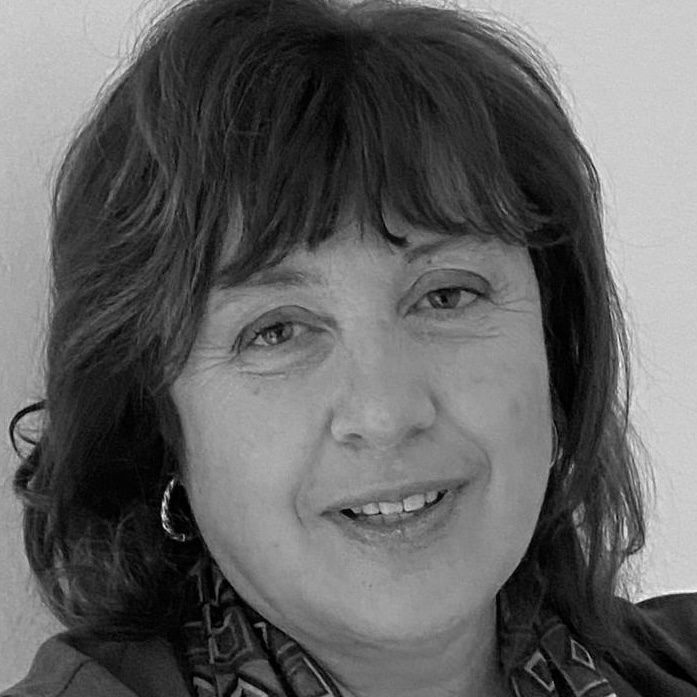
Patrizia Battilani has been a member of the Scientific Committee since 2025.
After a degree in Economics and Management She took the research doctorate in Political economy during which she spent 9 months at the London School of Economics. Professor of Economic History at the University of Bologna since 2002, in July 2013 she was a visiting scholar at the University of Sydney and during the 2017-18 academic year at the University of Glasgow. She works on Innovation in cultural tourism and she sit on the Advisory Board of the Journal of Tourism History (Taylor and Francis publisher). From 2012 to 2016 she was Director of the Degree Programme in Tourism Economics and from 2018 to July 2021, she head the CAST, the Center for Advanced Studies in Tourism of the Bologna University.
In October 2014, at the Council of Europe’s Annual Forum on Cultural Routes, she contributed to the drafting of the Baku Declaration on Cultural Routes with regard to economic and social promotion objectives. She also deals with business history and is particularly interested in the topics of cooperative enterprises and corporate welfare. Since 2014, she has been a member of the scientific committee of the Master’s degree programme in Cooperative Economics.
Regulations of the Scientific Committee
The Scientific Committee is set up to perform the following functions:
a) examine the documents related to new applications for membership, express opinions and confirm the scientific importance of the documents on the basis of the provisions in force;
b) express opinions on the activities proposed in the Confederation’s work plan;
c) make proposals;
d) monitor the scientific quality of the activities carried out and the presence of the expected eligibility requirements;
e) monitor the scientific quality of international promotional material;
f) draw up an annual report on the activities carried out.
In addition to the annual meeting at the General Assembly of the Phoenicians’ Route, the members of the Scientific Committee are asked to give their opinion on the candidacies of new members and on the consistency of the activities carried out during the year compared to the objectives established by the General Assembly. Moreover, the Scientific Committee is required to make contributions through specific research, often subject of both academic publications and international scientific dissemination at events, conferences, seminars, forums, through practical means such as educational activities and in contexts in which members of the Committee operate individually and in specific activities of the Cultural Route.
The work of the Scientific Committee is sometimes supported and supported by the Technical Steering Committee. Each National Network will be able to create a Scientific Committee of the Network with different competencies and research areas, for example:
- Archaeology and history
- Tourism sciences and local development
- Education and pedagogy
- Cultural management, culture economy, cultural policies, cultural management
- Communication and sustainable development
The members of the Scientific Committees of the Networks may also be appointed to join the Transversal Thematic Commissions to support the work of the Scientific Committee mentioned above.

